Paolo Buffa Fluted Desk with Hidden Drawers, Italy, 1940s
Description
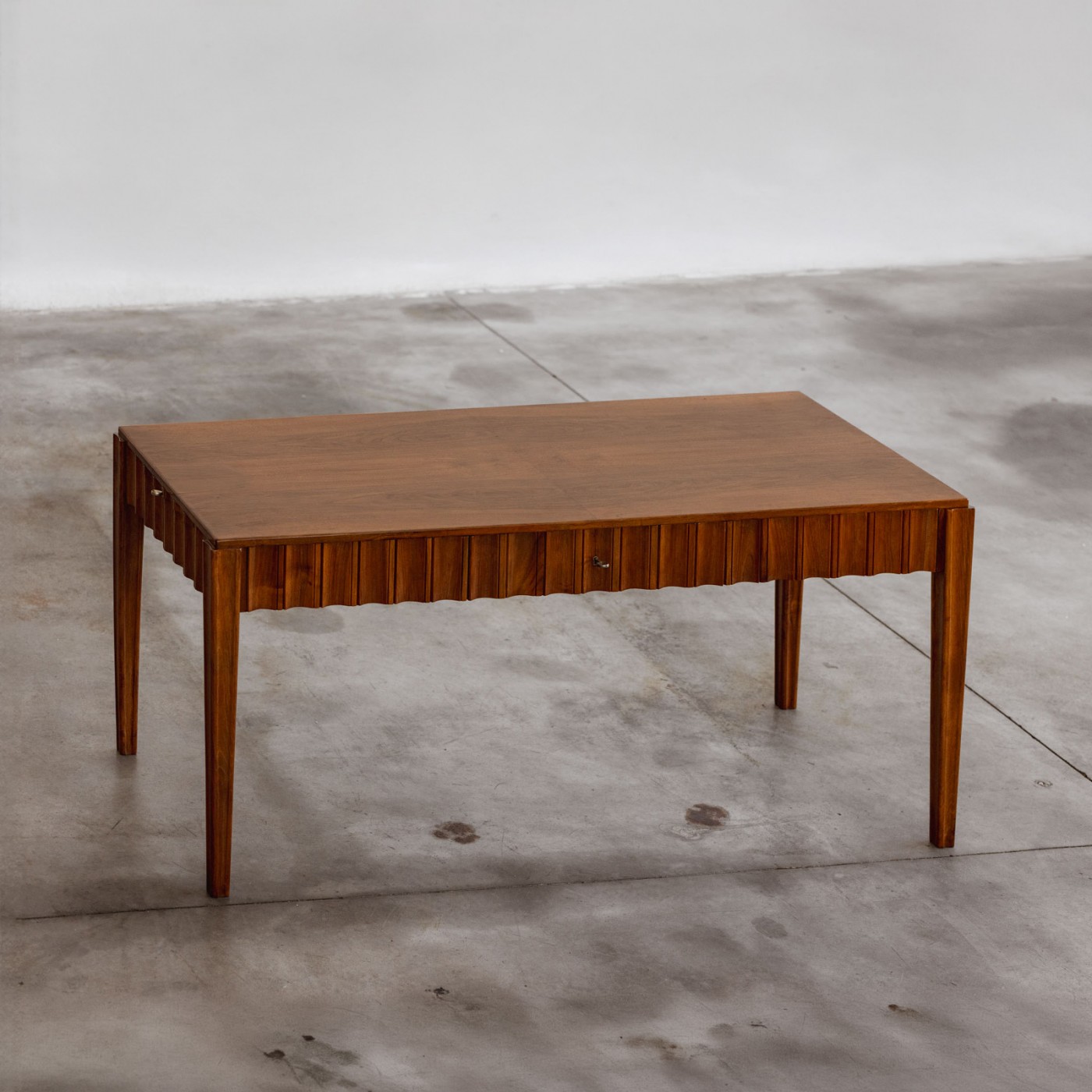
Paolo Buffa Fluted Desk with Hidden Drawers, wood, Italy, 1940s
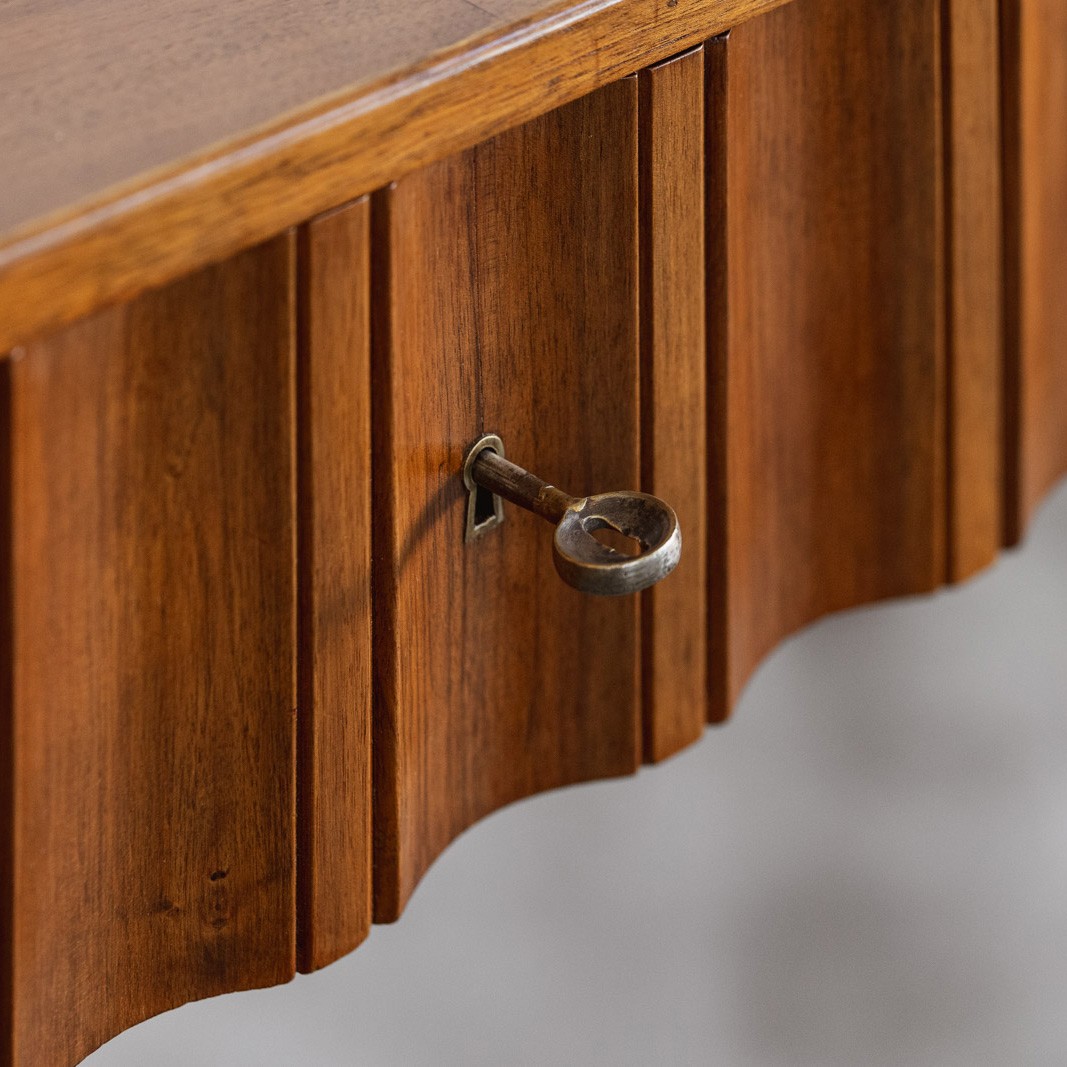
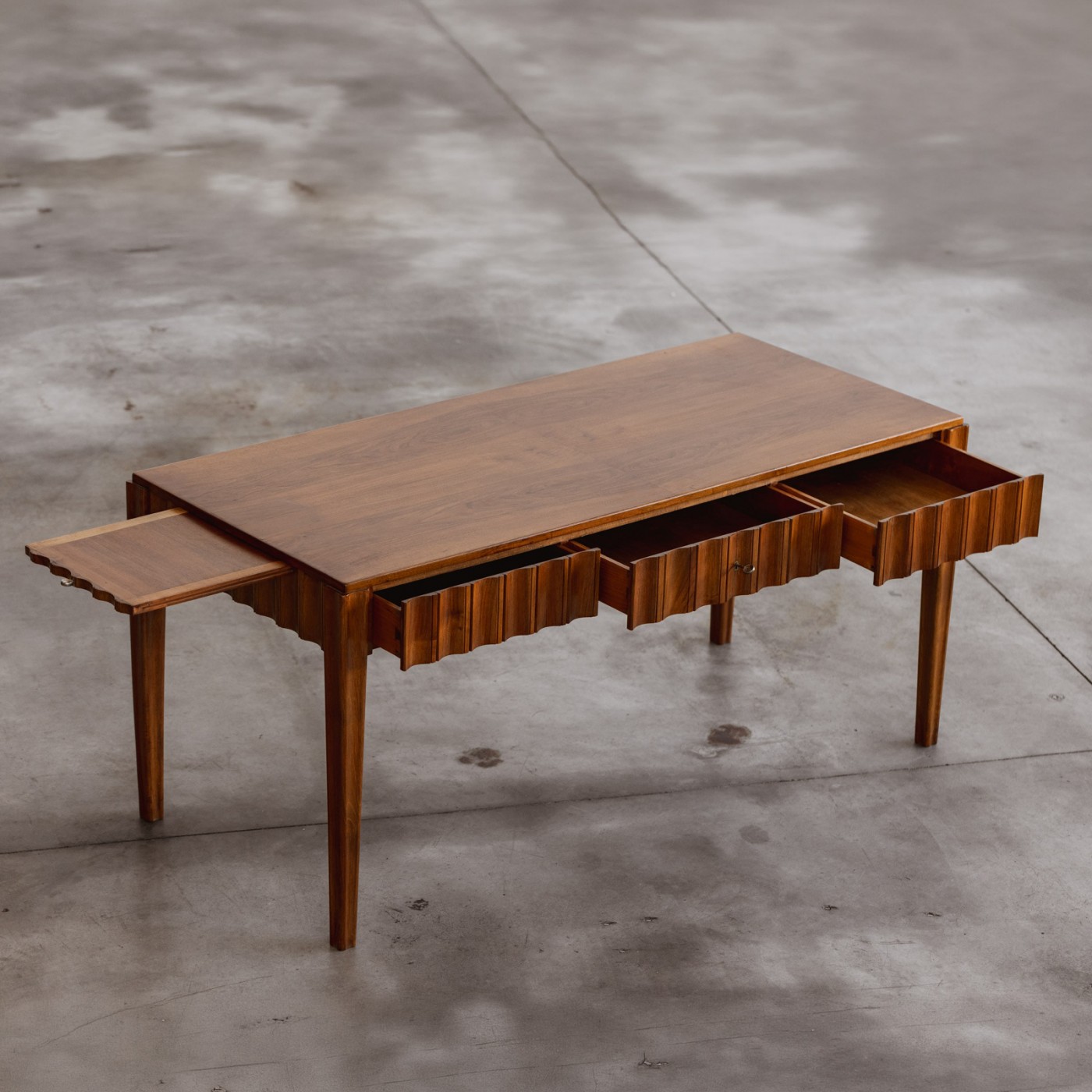
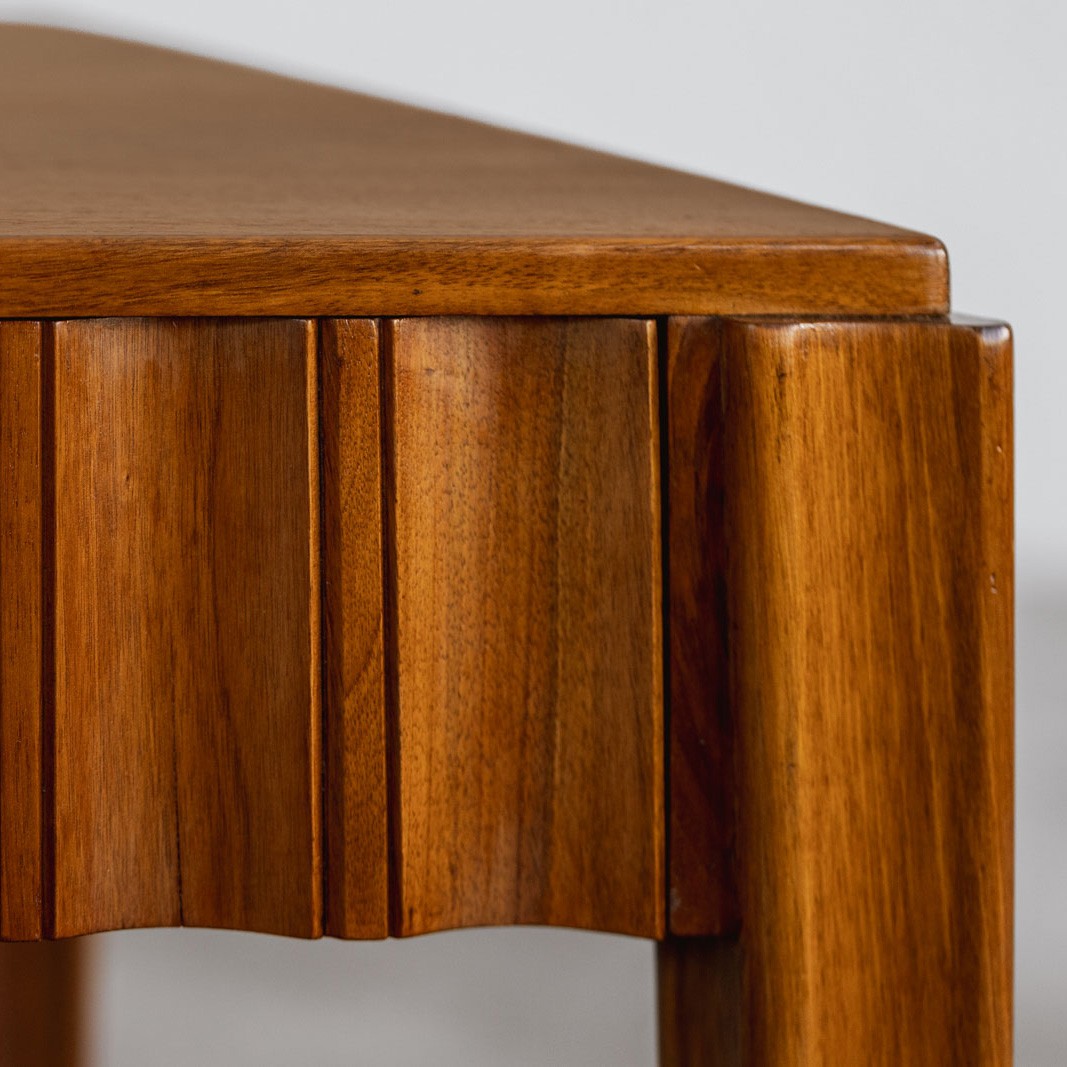
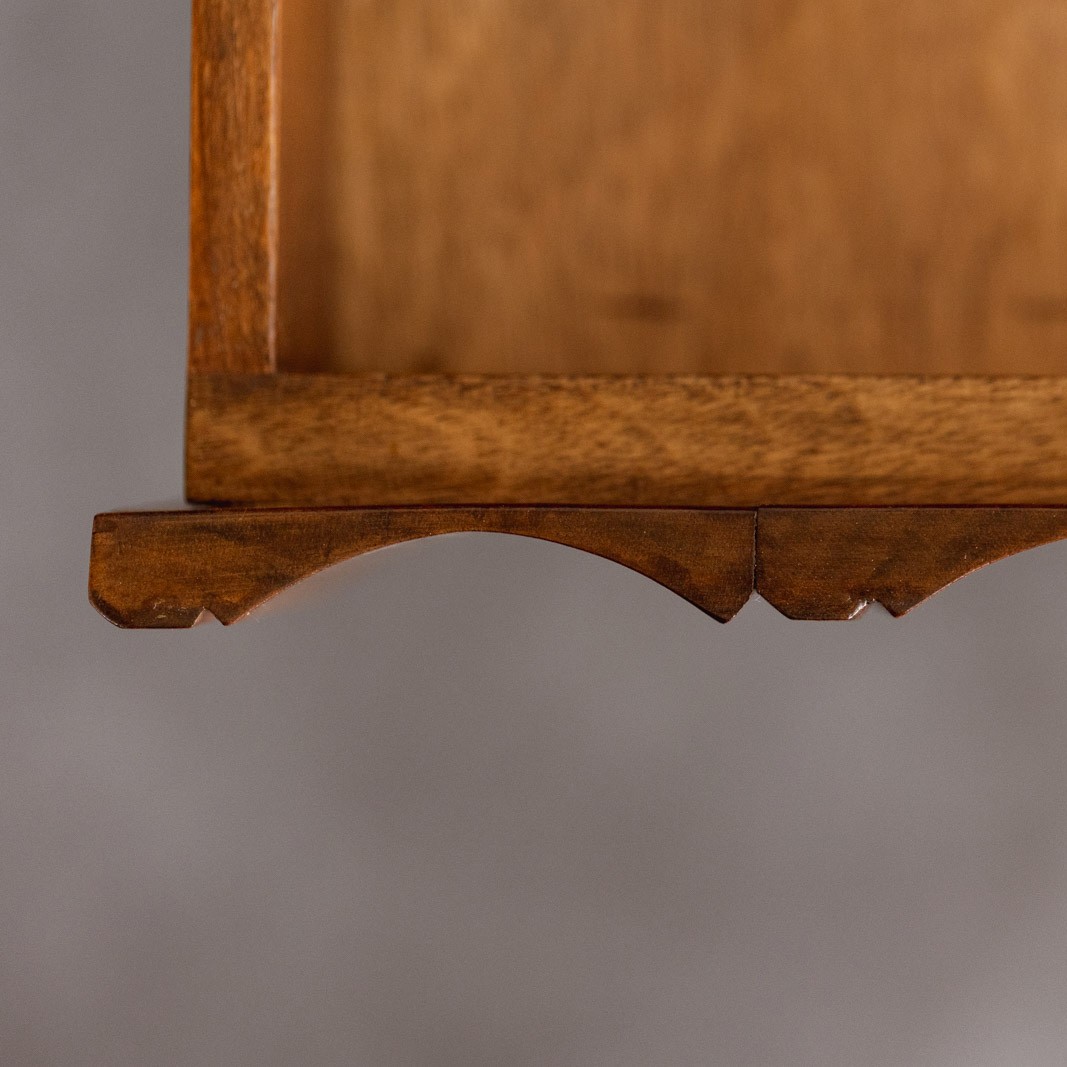
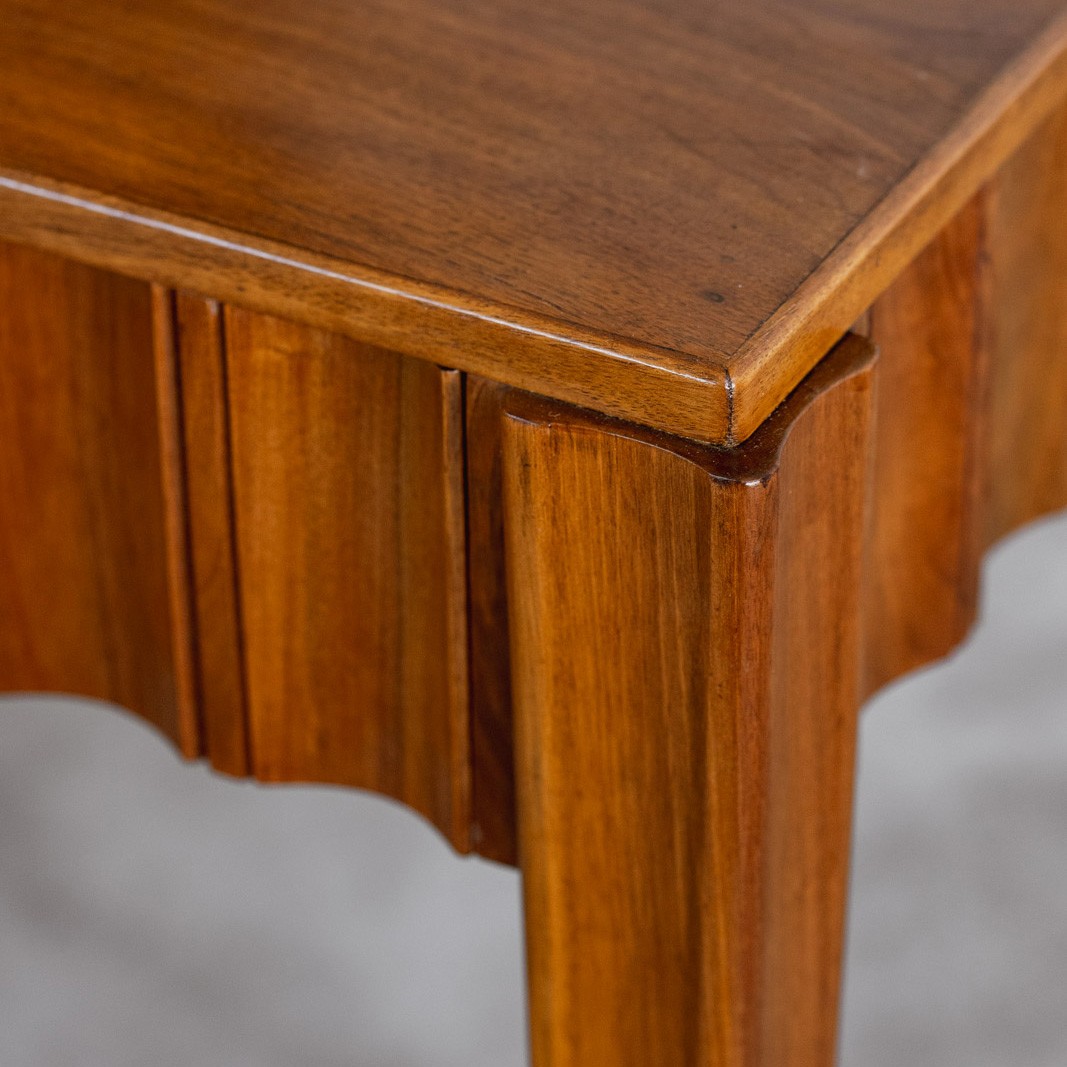
This desk unfolds with quiet ceremony: a rectangular top in warm wood grain sits above a facade entirely given over to rhythm, where three drawers are dressed in tightly spaced fluted panels that continue unbroken across the scalloped apron. The undulating lower edge, cut in soft repeating waves, turns what could have been a plain valance into a piece of sculpture in its own right, while the brass escutcheons and a small hinged key introduce a note of old world craftsmanship. A pull out slide integrated into one side extends the working surface when needed, a detail that speaks to the practical intelligence Paolo Buffa built into his desk designs. The tapered, faceted legs terminate in a subtle bracket where they meet the apron, echoing the fluting above and grounding the piece with a quiet architectural confidence.
This continuous vertical fluting, the scalloped silhouette, and the tapered leg with its bracketed junction are hallmarks of Paolo Buffa's desks and consoles of the 1940s, a period in which he tempered Milanese rationalism with ornamental restraint rather than abandoning decoration altogether. Buffa's furniture from this period consistently favored this kind of controlled decorative rhythm over applied ornament, letting the joinery itself carry the visual interest, and this desk exemplifies that approach closely. The dovetailed drawer construction and the care given to every visible edge reflect the standards Buffa demanded of his cabinetmakers. Quietly rhythmic and beautifully made, this desk carries the discipline that defines Paolo Buffa's furniture of the period.
Dimensions
Height: 31.5 in (80 cm)
Width: 67.7 in (172 cm)
Depth: 30.3 in (77 cm)
Design
1940s
Manufacture
1940-1949
Material
Wood
Location
Lonigo, IT
Condition
Our atelier carefully restored the table, with attention to structural integrity, materials, and finish. The process was guided by deep respect for its authenticity, balancing technical intervention and historical sensitivity.