Pierluigi Colli Armchairs with Ottomans for Colli, Italy, 1940, Set of 2
Description
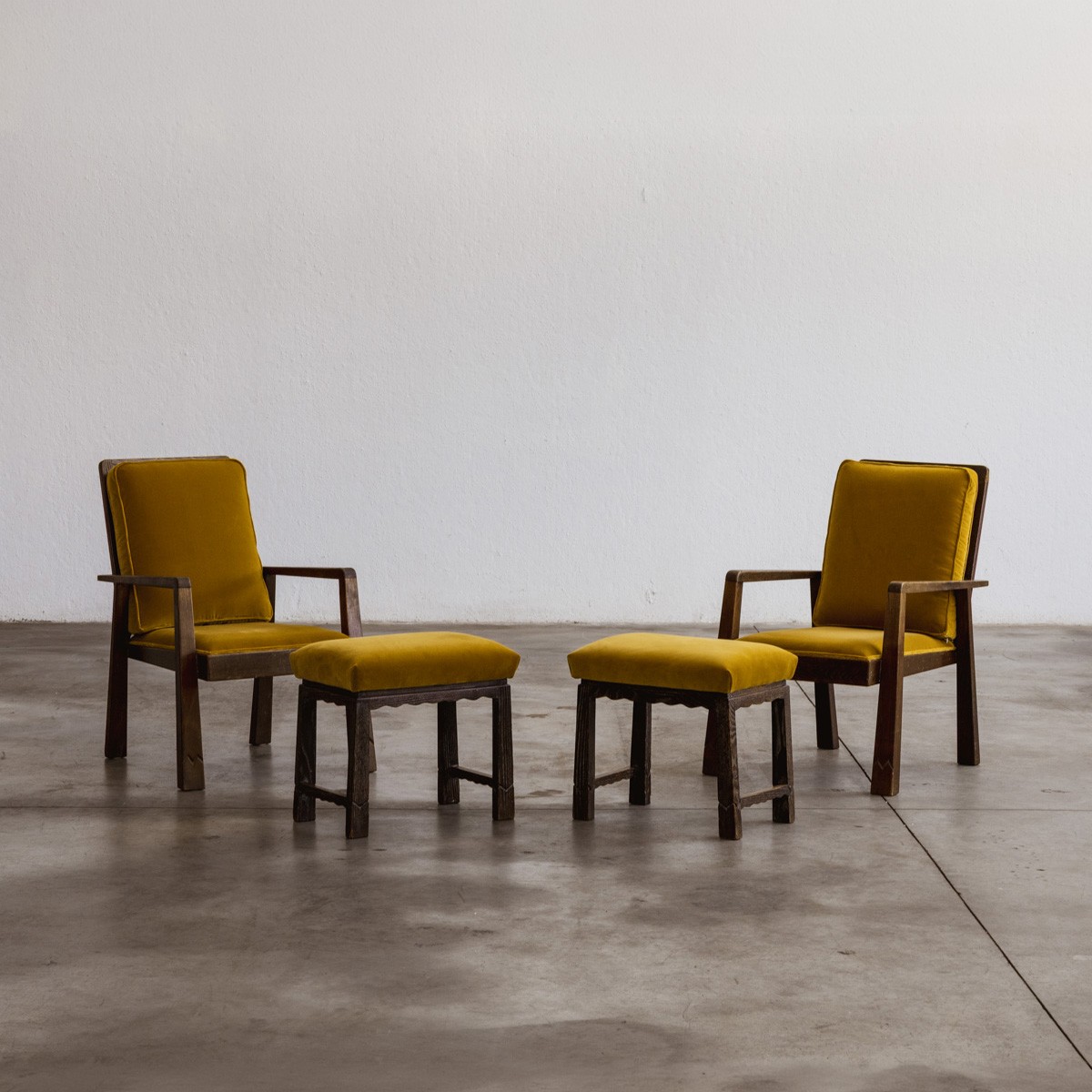
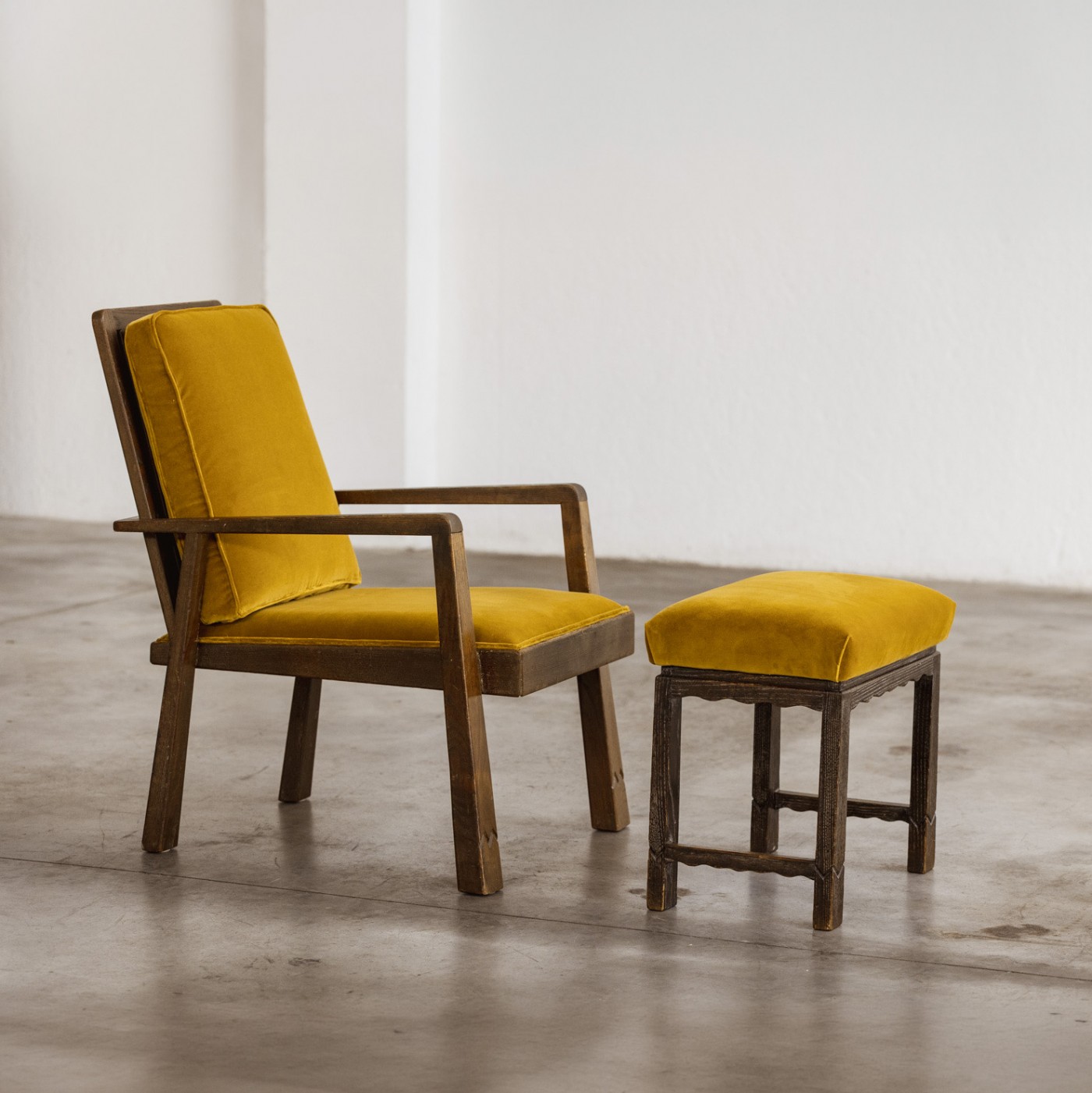
Pierluigi Colli armchairs with ottomans for Colli, wood and mustard velvet, Italy, 1940, set of 2.
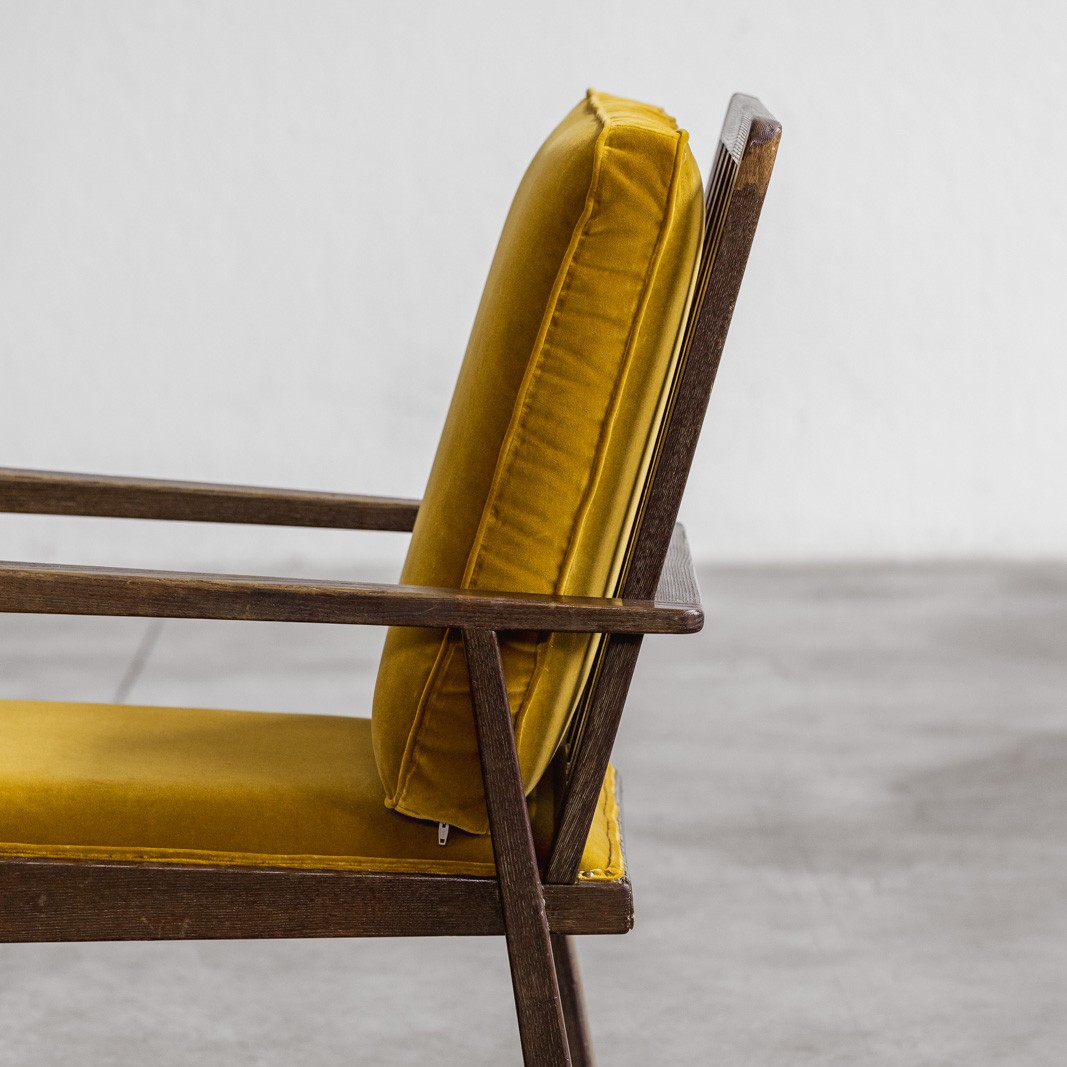
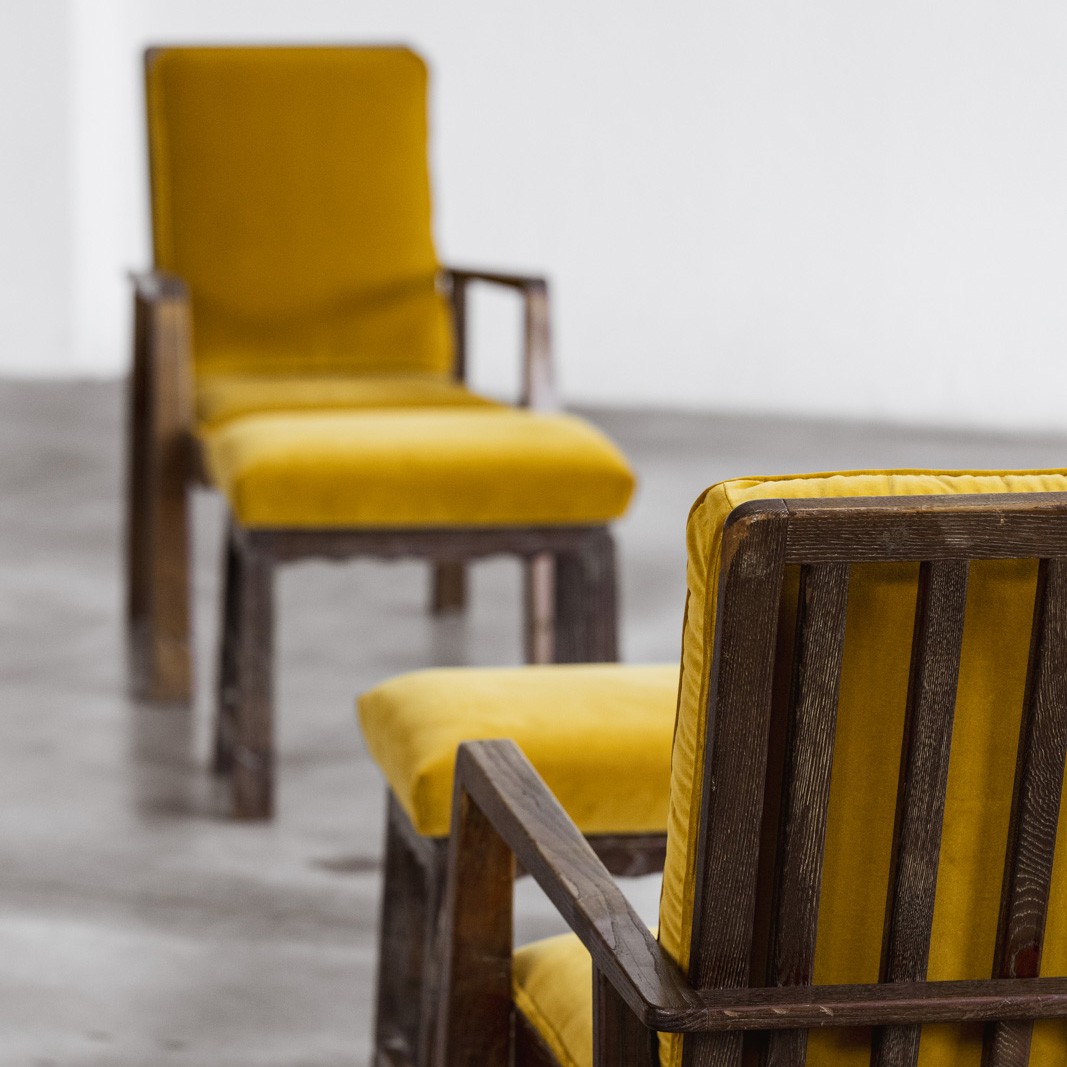
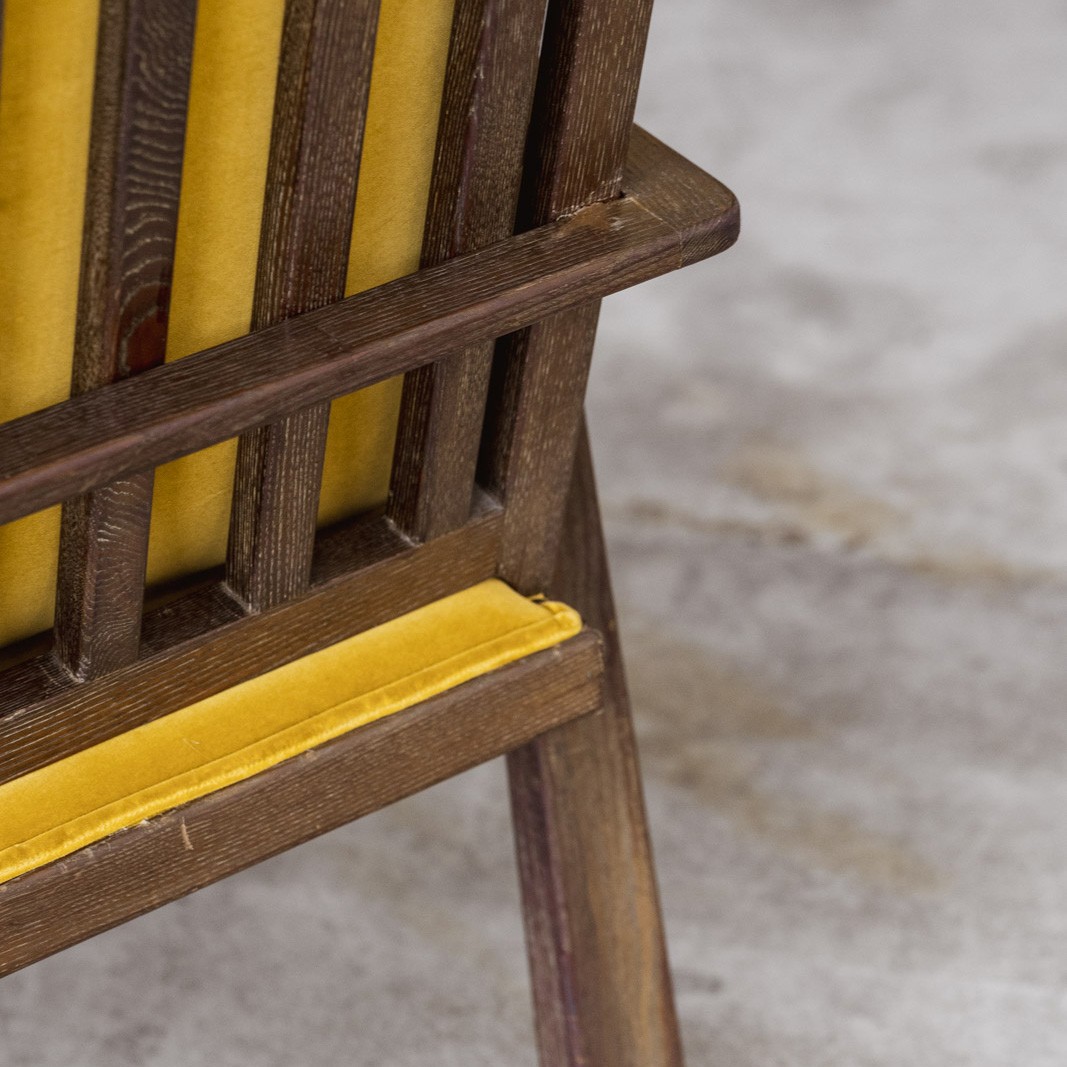
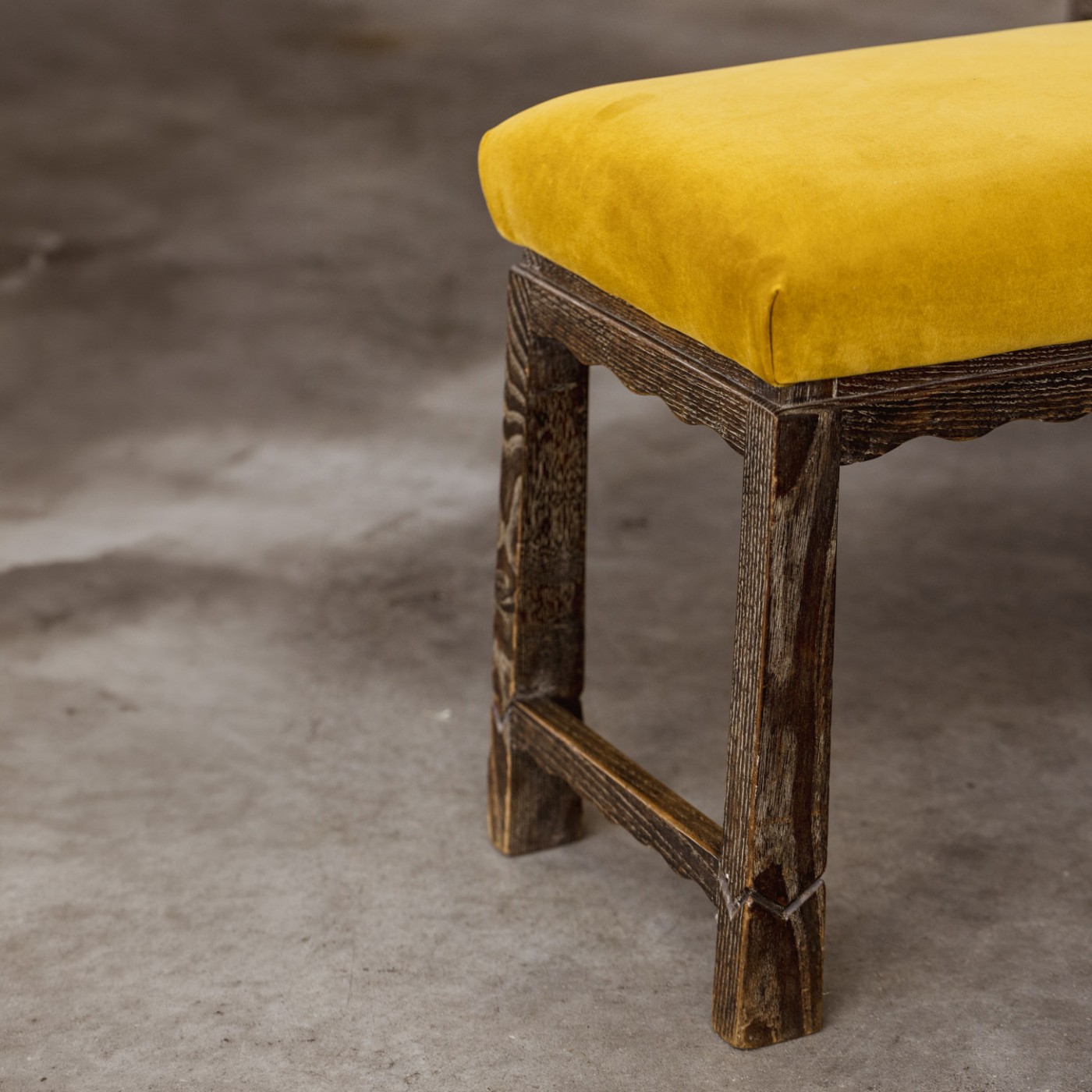
This set pairs two armchairs with two matching ottomans, all built in solid wood with the same angular, architectural vocabulary. The armchairs stand on straight tapered legs that meet the floor in a sculpted V shaped chevron cut into the front face, a detail repeated at all four points of contact with the ground, while their flat horizontal arms extend forward in a single easy line before meeting the front legs. The ottomans echo this language in a lower register, with straight legs joined by a low stretcher on each side and the same chevron carving marking the base, alongside a gently scalloped apron beneath the seat rail. The frames throughout rely on simple exposed joinery rather than applied ornament, and the seats are set into their respective frames in the manner typical of Italian workshop production of the period.
The set is attributed to Pier Luigi Colli, an architect and designer active in Turin from the 1920s. Colli began his career working with figures including Gio Ponti, Emilio Lancia, and Luigi Vietti before establishing an independent practice in the following decade, and his furniture from this period is known for clean lines and geometric forms realized in solid wood. The carved chevron motif seen across both the armchairs and the ottomans recurs in furniture associated with his Turin production, marking a transition in his output from earlier Art Deco ornament toward the more architectural vocabulary he developed through the 1940s.
Dimensions
Armchair:
Height: 36.03 in (91.5 cm)
Width: 24.81 in (63 cm)
Depth: 31.5 in (80 cm)
Seat Height: 15.75 in (40 cm)
Ottoman:
Height: 14.96 in (38 cm)
Width: 20.47 in (52 cm)
Depth: 14.17 in (36 cm)
Design
1940
Manufacture
1940-1949
Material
Wood and velvet
Location
Lonigo, IT
Condition
Our atelier carefully restored and reupholstered the armchairs and the ottomans, with attention to structural integrity, materials, and finish. The process was guided by deep respect for their authenticity, balancing technical intervention and historical sensitivity.